Valve macht bei SteamVR Hausputz für den Start von „Half-Life: Alyx“. News zu VR, AR und KI | MIXED.de & Matthias Bastian
Lies Beneath: VR-Horror für Quest und Rift
Der neueste Oculus-Studios-Titel Lies Beneath trumpft mit einem einzigartigen Horrorschauplatz und einem coolen Comicstil auf. MIXED | News zu VR, AR und KI & Tomislav Bezmalinovic

GDC ‘postponed’ as multiple participants pull out over coronavirus fears
GDC is cancelled. Organizers decided not to hold the event after multiple companies pulled out due to fears about the spread of coronavirus. AR/VR – VentureBeat & Jeff Grubb
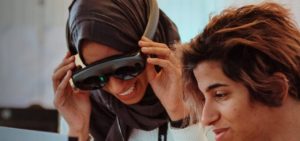
Market Reality: Facebook Cancels F8, Magic Leap Invites Developers to Headquarters, & Snapchat Promotes New UK Currency
Amid the coronavirus chaos, two companies at the forefront of augmented reality technology took starkly different approaches to their upcoming developers conferences, as Facebook has canceled its annual F8 conference and Magic Leap plans to invite a l… Next Reality & Tommy Palladino
Can you help me with this list of wearable displays? Which ones are missing?
submitted by /u/LegendOfHiddnTempl [link] [comments] Augmented Reality & /u/LegendOfHiddnTempl
Here is my take on AR headsets (link). I would love to hear peoples thoughts on: – why more headsets don’t simply act as a display and sensory platform while leaving the processing to a tethered mobile phone. – And what I see as an obsession with having the headsets look like glasses.
submitted by /u/StretchTheBubble [link] [comments] Augmented Reality & /u/StretchTheBubble

Apple & Tim Cook Back Civil Rights Augmented Reality Experience & Tech Education in Alabama
As a native of Alabama, Apple CEO Tim Cook has a special place in his heart for the state. He also empathizes with the struggles that African-Americans have historically faced in the state, particularly during the 1950s and ’60s civil rights era.
Now… Next Reality & Tommy Palladino
iPhone 12: Mit schnellem WLAN-Streaming für die AR-Brille?
Das iPhone 12 soll einen neuen Wi-Fi-Standard unterstützen, der vor allem einem Zwecke dienen dürfte: Daten zu einer AR-Brille senden. News zu VR, AR und KI | MIXED.de & Tomislav Bezmalinovic
Onward: Pixar-Filmcrew versetzte sich mit VR-Brille in die Figuren
Um sich besser in die Charaktere des Films hineinzuversetzen, betrat die Crew Onwards Schauplatz mit einer VR-Brille. News zu VR, AR und KI | MIXED.de & Tomislav Bezmalinovic
[HELP] Correct Pose Estimation Opencv + Opengl
Hi everybody,
i’m developing an AR projection, but i run out into a problem. I can’t make my object stay exactly on the marker, it seems to travel all around the image…
I’ve used ARuco and OpenCV for detection of rvec and tvec and OpenGL for rendering. I know that a change of prospective matrix is needeed due to opengl different coordinate system but i can’t find the right one and how to apply it.
Can you help me?
Here’s my code
############################### # GLOBAL VARIABLES width = 1280 height = 720 texture_background = None chess_piece = None webcam = cv2.VideoCapture(0) camera_matrix, dist_coefs, rvecs, tvecs = calibrate() znear = 10 zfar = 10000.0 ############################### ############################### INIT OPENGL def init_gl(): global texture_background, chess_piece glClearColor(0.0, 0.0, 0.0, 0.0) glClearDepth(1.0) # glDepthFunc(GL_LESS) glDepthFunc(GL_LEQUAL) glEnable(GL_DEPTH_TEST) glShadeModel(GL_SMOOTH) glMatrixMode(GL_PROJECTION) glLoadIdentity() gluPerspective(40.34, 1.78, znear, zfar) #Cambiare all'occorrenza glViewport(0,0,width,height) ppm = getOpenglProjectionMatrix(camera_matrix, znear, zfar, width, height) # # glMatrixMode(GL_PROJECTION) # # glPushMatrix() glLoadMatrixf(ppm) glMatrixMode(GL_MODELVIEW) # assign shapes chess_piece = OBJ(obj_path, True) # assign texture glEnable(GL_TEXTURE_2D) texture_background = glGenTextures(1) ############################### WEBCAM HANDLER def getNextFrame(): global webcam ret, frame = webcam.read() if not ret or frame is None: webcam.release() print("Released webcam") return None return frame ############################### WINDOWS FUNCTION def draw_background(image): global texture_background bg_image = cv2.flip(image, 0) bg_image = Image.fromarray(bg_image) ix = bg_image.size[0] iy = bg_image.size[1] bg_image = bg_image.tobytes("raw", "BGRX", 0, -1) # create background texture glBindTexture(GL_TEXTURE_2D, texture_background) glTexParameterf(GL_TEXTURE_2D, GL_TEXTURE_MAG_FILTER, GL_NEAREST) glTexParameterf(GL_TEXTURE_2D, GL_TEXTURE_MIN_FILTER, GL_NEAREST) glTexImage2D(GL_TEXTURE_2D, 0, 3, ix, iy, 0, GL_RGBA, GL_UNSIGNED_BYTE, bg_image) # draw background glBindTexture(GL_TEXTURE_2D, texture_background) glPushMatrix() glTranslatef(0.0,0.0,-10.0) glBegin(GL_QUADS) glTexCoord2f(0.0, 1.0); glVertex3f(-4.0, -3.0, 3.0) glTexCoord2f(1.0, 1.0); glVertex3f( 4.0, -3.0, 3.0) glTexCoord2f(1.0, 0.0); glVertex3f( 4.0, 3.0, 3.0) glTexCoord2f(0.0, 0.0); glVertex3f(-4.0, 3.0, 3.0) glEnd( ) glPopMatrix() def draw_obj(rvec, tvec, center, p_k): ### OBTAINING PROJECTION MATRIX view_matrix = getCorrectPPM(rvec,tvec) # view_matrix = tryThis(p_k) ############################### lightfv = ctypes.c_float * 4 glDisable(GL_TEXTURE_2D) glEnable(GL_DEPTH_TEST) glLightfv(GL_LIGHT0, GL_POSITION, lightfv(-1.0, 1.0, 1.0, 0.0)) glEnable(GL_LIGHT0) glMatrixMode(GL_MODELVIEW) glPushMatrix() glLoadMatrixd(view_matrix) glTranslatef(0.0, 0.0, -100.0) # glTranslatef(-center[0], center[1], 0.0) # glRotatef(-90, 1.0, 0.0, 0.0) glEnable(GL_LIGHTING) glCallList(chess_piece.gl_list) glColor3f(1.0, 1.0, 1.0) glPopMatrix() glEnable(GL_TEXTURE_2D) glDisable(GL_DEPTH_TEST) glDisable(GL_LIGHTING) def display(): global chess_piece, camera_matrix, dist_coefs glClear(GL_COLOR_BUFFER_BIT | GL_DEPTH_BUFFER_BIT) glLoadIdentity() image = getNextFrame() rvec, tvec, frame, center, p_k = detect(image, camera_matrix, dist_coefs, chess_piece) draw_background(frame) if len(rvec) != 0 and len(tvec) != 0: draw_obj(rvec, tvec, center, p_k) glutSwapBuffers() def reshape(): if height == 0: height = 1 glViewport(0, 0, width, height) glMatrixMode(GL_PROJECTION) glLoadIdentity() if width <= height: glOrtho(-nRange, nRange, -nRange*h/w, nRange*h/w, -nRange, nRange) else: glOrtho(-nRange*w/h, nRange*w/h, -nRange, nRange, -nRange, nRange) glMatrixMode(GL_MODELVIEW) glLoadIdentity() ############################### APPLICATION def init_application(): print("Initializing app") glutInit() glutInitDisplayMode(GLUT_DOUBLE | GLUT_RGBA | GLUT_DEPTH) glutInitWindowSize(width, height) glutInitWindowPosition(0, 0) glutCreateWindow("AR Chess") glutDisplayFunc(display) glutIdleFunc(display) # glutReshapeFunc(reshape) init_gl() print("Inizialization completed") glutMainLoop() init_application() The function to get the „corrected ppm“ is:
def getOpenglProjectionMatrix(camera_matrix, near, far, width, height): K00 = camera_matrix[0][0] K11 = camera_matrix[1][1] K01 = camera_matrix[0][1] K02 = camera_matrix[0][2] K12 = camera_matrix[1][2] height = 720 width = 1280 fx = K00 fy = K11 fovy = 2*np.arctan(0.5*height/fy)*180/np.pi aspect = (width*fy)/(height*fx) near = 0.1 far = 100.0 print("FOVY:",fovy) print("ASPECT:",aspect) result00 = 2*K00 / width # result[0,1] = -2*K01 / width result01 = 0 result02 = (width - 2*K02 + 2*0) / width result03 = 0 result10 = 0 result11 = -2*K11 / height result12 = (height - 2*K12 + 2*0) / height result13 = 0 result20 = 0 result21 = 0 result22 = (-far - near) / (far - near) result23 = -2*far*near/(far-near) result30 = 0 result31 = 0 result32 = -1 result33 = 0 result = np.array([[result00,result01,result02,result03], [result10,result11,result12,result13], [result20,result21,result22,result23], [result30,result31,result32,result33]]) print(result) print(type(result)) m = map(float,result.T.flat) m = (GLfloat * 16)(*m) return m submitted by /u/Dokuni
[link] [comments] Augmented Reality & /u/Dokuni